
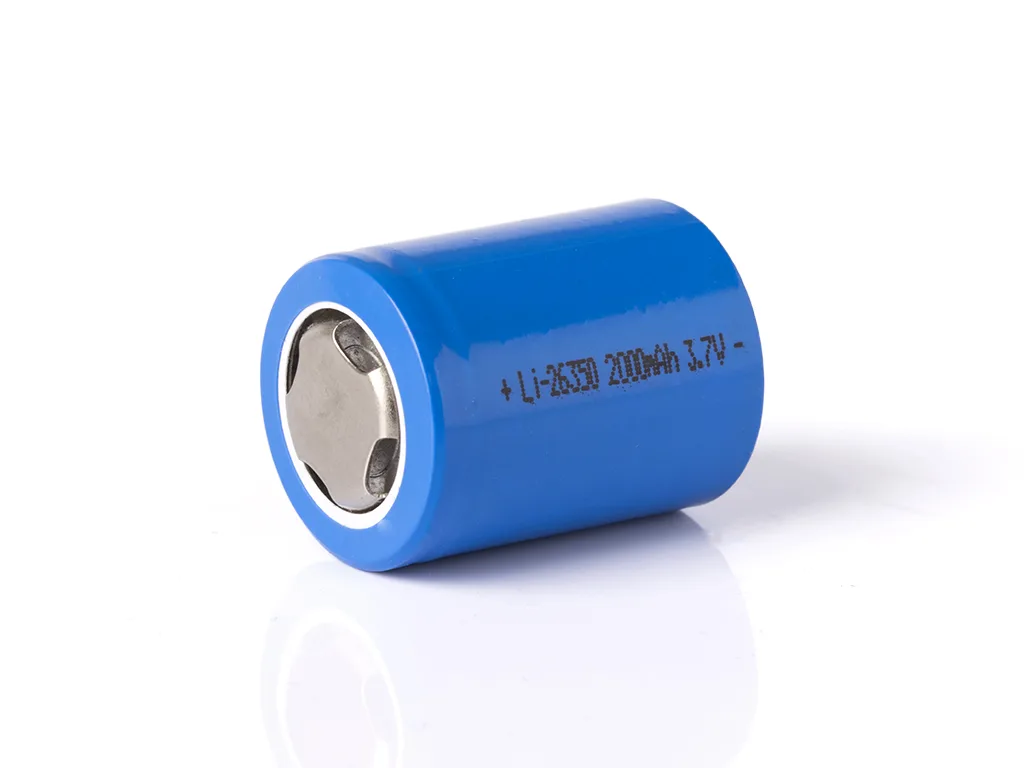
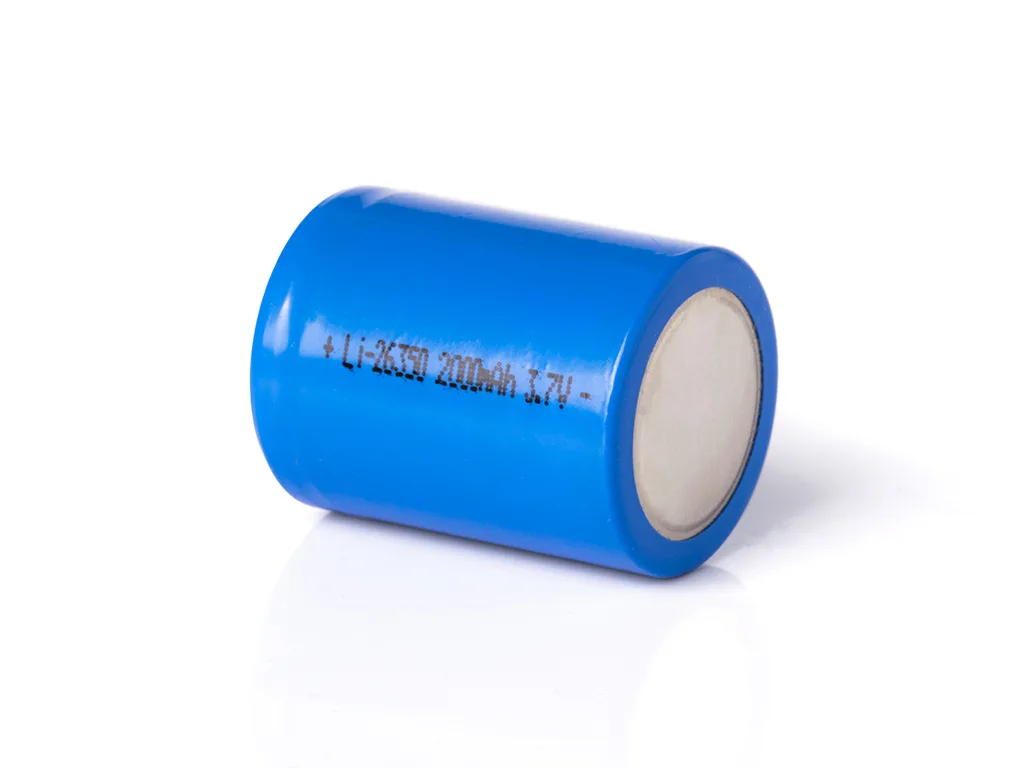
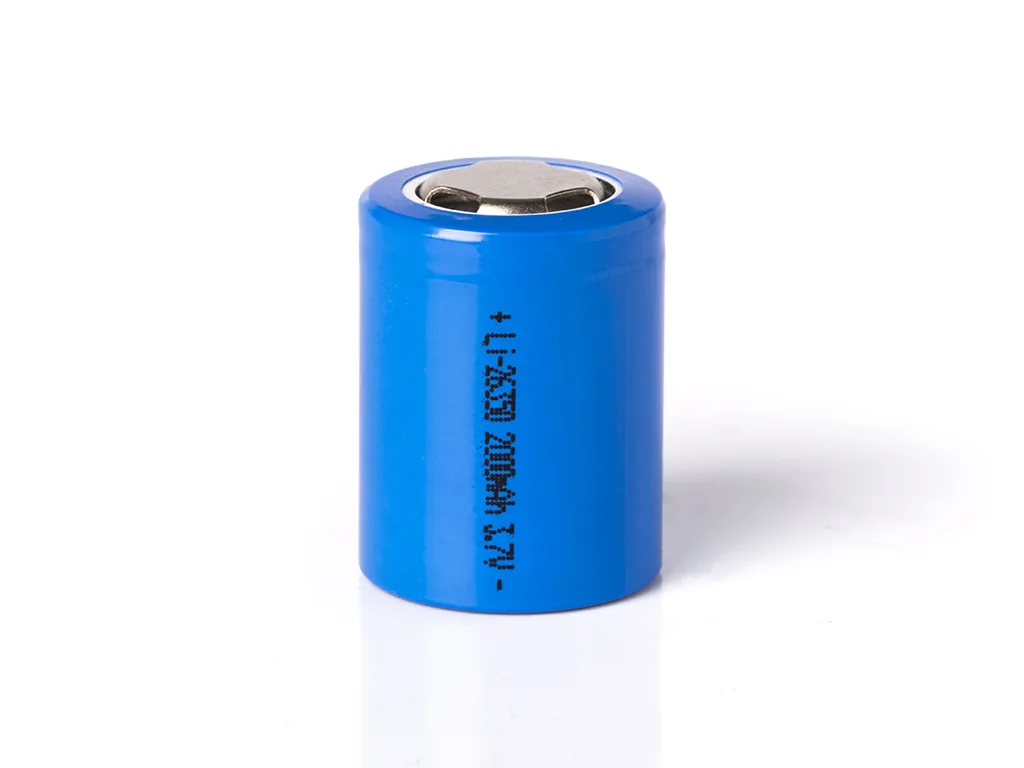

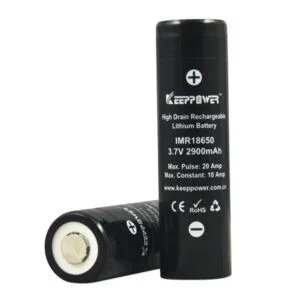
The special format 26350 rechargeable lithium-ion battery in Keeppower’s usual industry standard. When developing the cell, the manufacturer’s focus was on robustness and longevity. The positive terminal is slightly raised, thus enabling series connection without a fixed connection, as is the case in torches, workshop lamps or also in model making.
These cells are also used in applications for mobile energy, LED applications, model making, battery packs, etc. The cell is designed for moderate power and allows safe and long-lasting use.
The cell has no integrated protection electronics, which is necessary for a safe use of Li-Ion batteries.
Lithium cells may only be operated with protective electronics!
Please note that lithium cells may only be used by qualified persons.
Incorrect handling or short-circuiting may result in fire or explosion.
Lithium-ion batteries are thermally stable and are not subject to memory effect.
They work on the basis of lithium and are characterised by a high energy density.
1x 26350-2000mAh Lithium-Ion battery
*Other options:
– No selection: Battery cell without options as in the main picture.
– Raised positive terminalBy means of a special welding process, a button (nipple) is welded to the positive pole, raising the flat positive pole by approx. 2 mm, similar to e.g. a normal battery.(for extra charge).
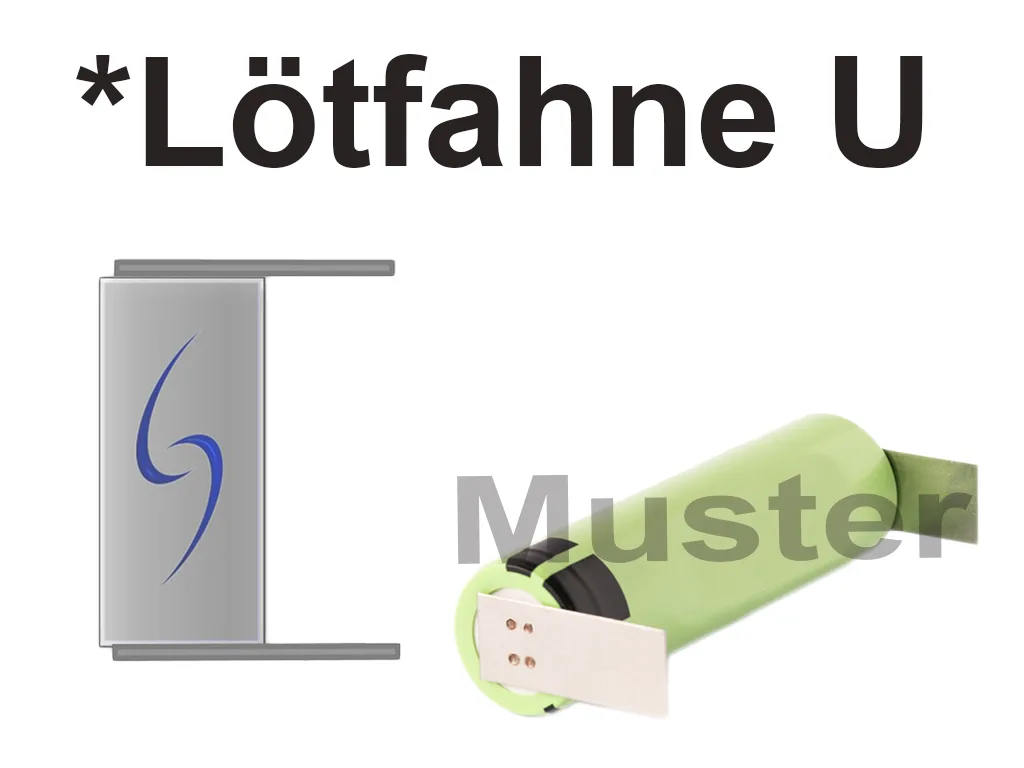
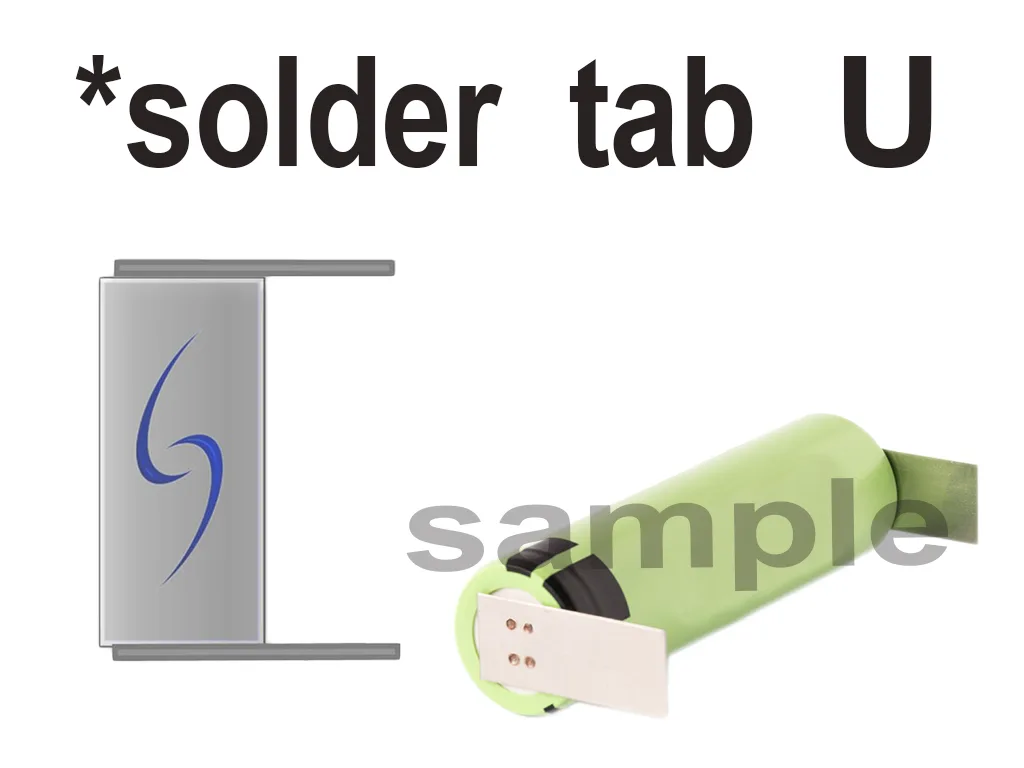
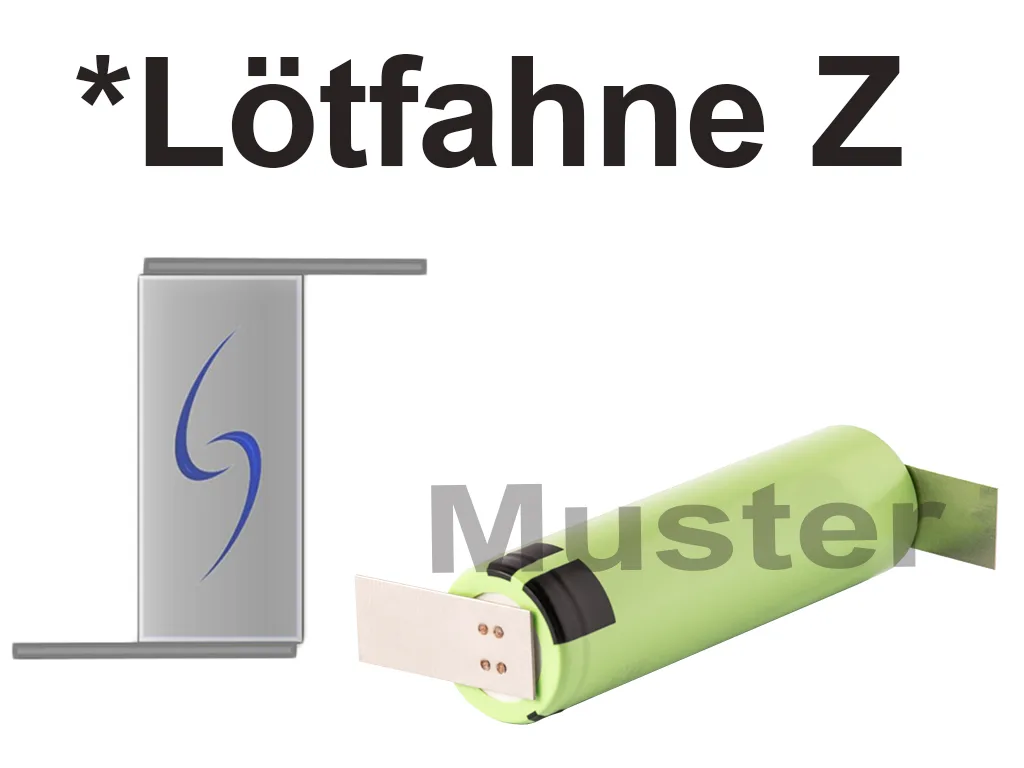
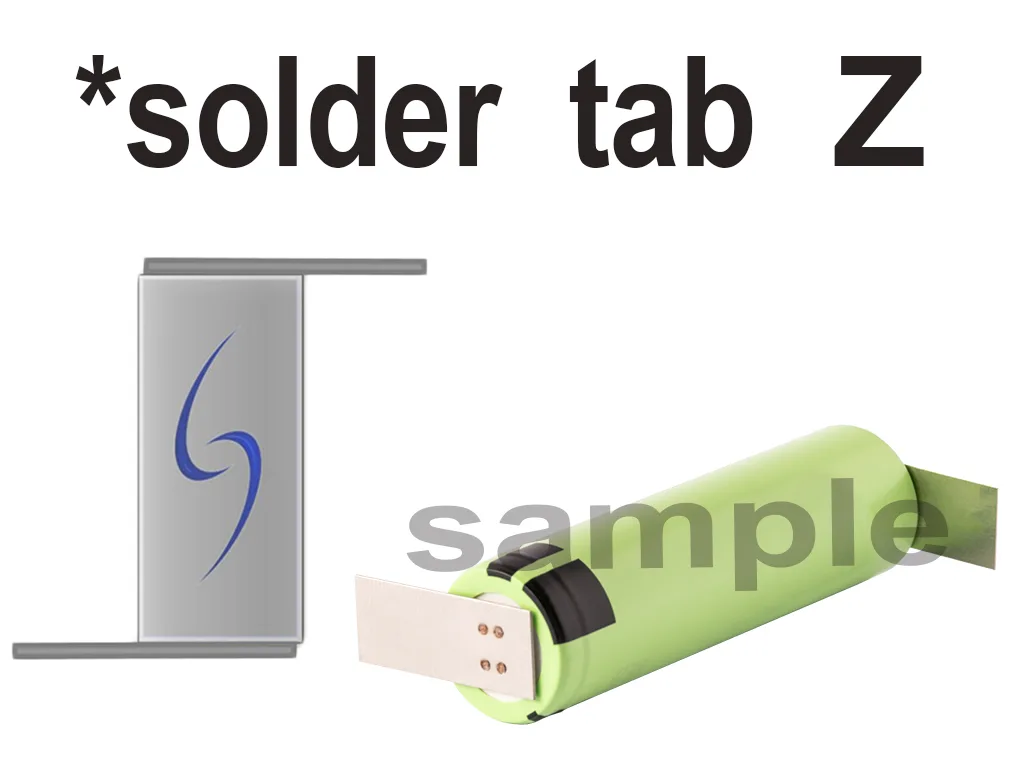
– Solder tagA metal tongue which is firmly connected to the battery at the plus and minus pole and is used to solder a connecting wire or further batteries to the component.
U – Both solder tags point in one direction (e.g. for parallel connection or soldering to electronic components)
Z – Solder tags point in opposite direction. (e.g. for series connection or soldering to electronic components).
The industrial cells are intended for further processing.
Technical Data
| Model | 18650-2000 |
| Capacity | 2000mAh |
| Min. capacity | 2000mAh at 0.2C |
| Nominal voltage | 3.6V – 3.7V |
| Charging end voltage | 4.2V ± 0.05V |
| Discharge voltage | 2,50V |
| Positive terminal | flat (Flat Top) |
| Max. Discharge current (constant) | 2C = 4A (4000mA) |
| Max. Discharge current (pulse approx. 3s) | 3C = 6A (6000mA) |
| Standard discharge current | 0,40A (400mA) |
| Charging current | 0.xx – 1.4A (1400mA) |
| Charging method | CC-CV |
| Diameter | 26.10 mm ± 0.15 mm |
| Height | 35.0 mm ± 0.20 mm |
| Weight | 48 g ± 1 g |
| Charging current (2) | 0.xx – 1.0A (1000mA) |
| Max. Charging current | 1.4A (1400mA) |
| Operating temperature charging | 0 °C – 45 °C |
| Operating temperature discharging | -20 °C – 60 °C |
Notes:
Charging lithium-ion batteries requires a special charger that charges the batteries according to a special charging procedure. (CCCV = constant current, constant voltage.) The batteries must not be charged above a voltage of 4.2 volts, otherwise there is a risk of fire and explosion. It is advantageous to charge the batteries only up to approx. 4.1 volts, as this significantly increases the service life or the number of charging cycles (possibly up to double). Only lithium-ion chargers may be used for charging. However, the cheap chargers sometimes have the disadvantage that they do not switch off safely at the end of the charging process, but continue to charge the batteries with a small charging current, which can be dangerous.
Furthermore, rechargeable batteries and batteries do not belong in household waste! Please dispose of them as prescribed by law at the municipal collection points or in the [usually green] containers provided by retailers.








Reviews
There are no reviews yet.