
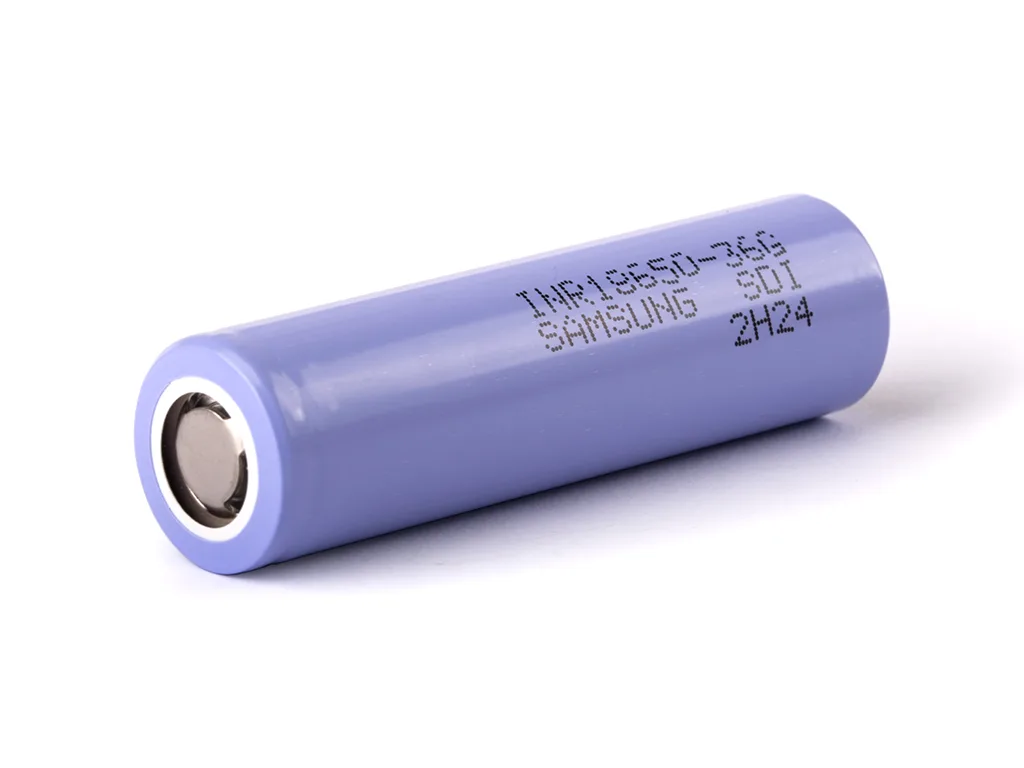
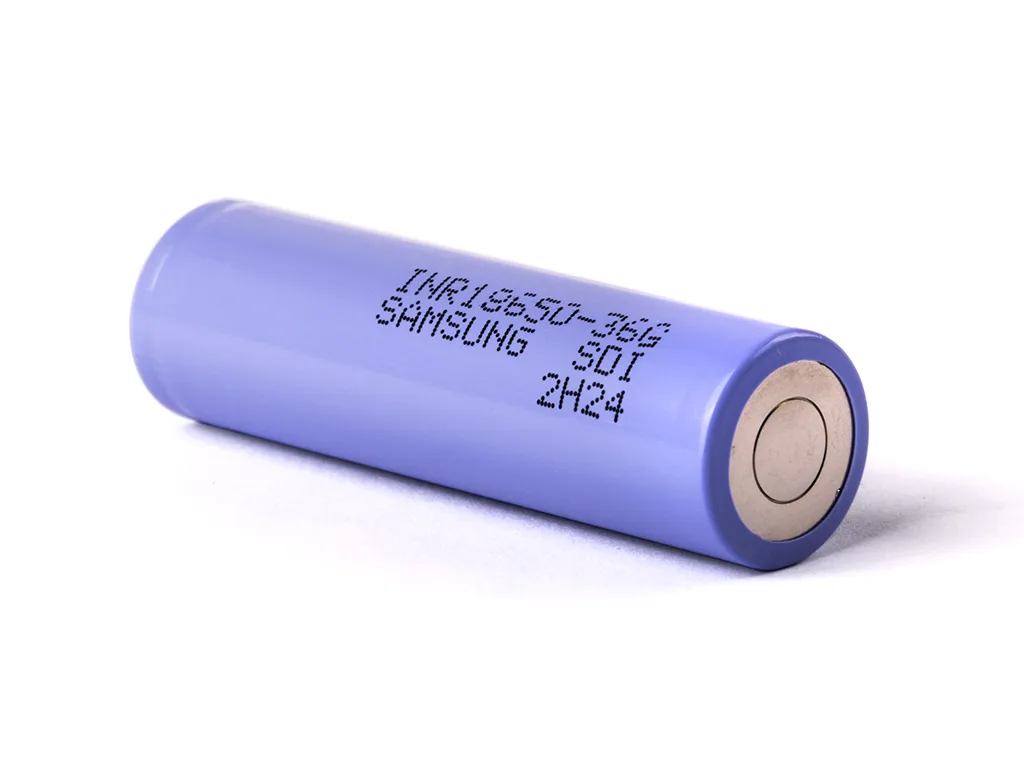
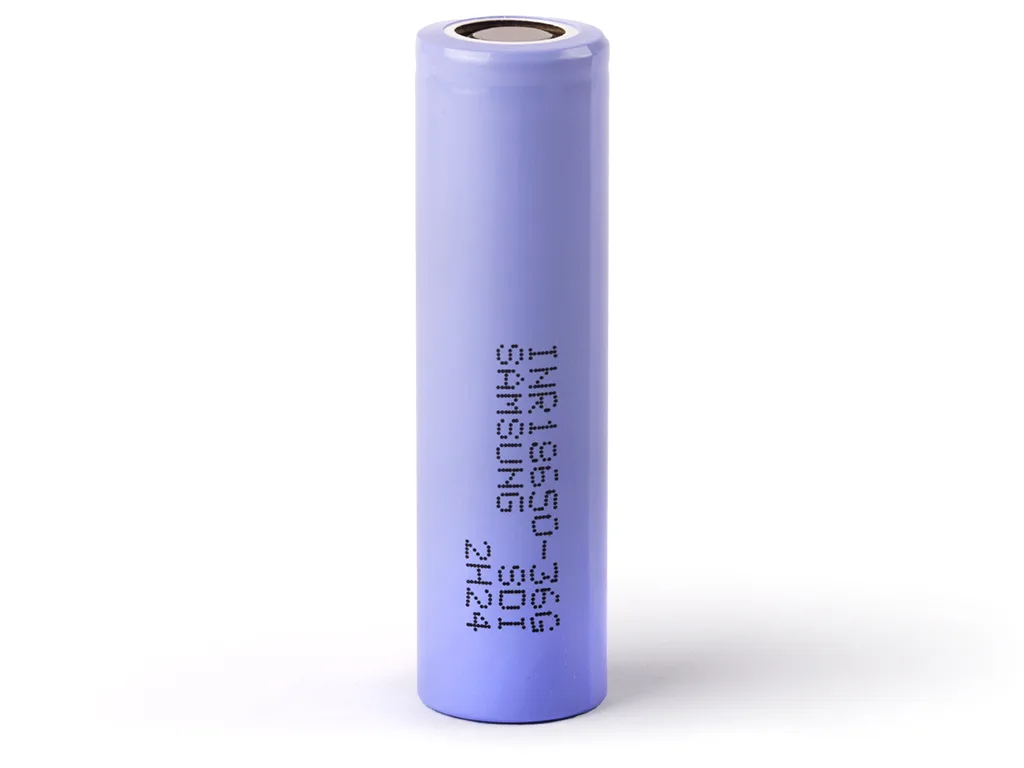
Designed for TESLA, best suited for LEDs, model making e-mobility and all other applications where powerful batteries are used.
In terms of current load, the cell achieves good values and can be used preferentially in e-mobility high-end e-bikes, e-scooters or e-scooters.
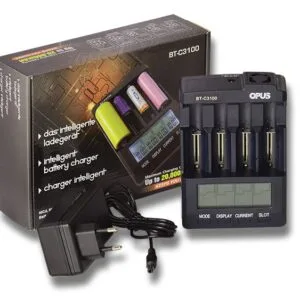
Li-ion batteries are thermally stable and are not subject to any memory effect. In addition, they are characterised by a particularly high energy density. At a charging current of 2000 mA, the Samsung battery takes three hours to charge; at a charging current of 3000 mA, it takes only 2.5 hours. We also have the matching chargers for charging the battery in stock for you, just take a look at the bottom of the page.
Lithium cells may only be operated with protective electronics!
Please note that lithium cells may only be used by authorised specialist personnel.
Incorrect handling or short-circuiting can lead to fire or explosion.
Lithium-ion batteries are thermally stable and are not subject to any memory effect.
They work on the basis of lithium and are characterised by a high energy density.
Technical Data
| Capacity | 3350mAh |
| Minimum capacity | 3250mAh |
| Rated voltage | 3.6V – 3.7V |
| Charging end voltage | 4,2V |
| Discharge current (constant) | 8A |
| max. discharge current (constant) | 10A |
| Charging current | 0.xx – 2000mA |
| Discharge voltage | 2,50V |
| Protective circuit PCB | not present |
| Positive terminal | flat (Flat Top) |
| Chemistry | LiNiCoAlO2 |
| Diameter | 18.55 mm ± 0.1 mm |
| Height | 65.25 mm ± 0.15 mm |
| Weight | 48 g ± 1 g |
| Charging method | CC-CV |
| Further information | www.LygteInfo.dk |
Notes:
A special charger is required for charging lithium ion batteries, which charges the batteries according to a special charging procedure. (CCCV = constant current, constant voltage.) The batteries must not be charged above a voltage of 4.2 volts, otherwise there is a risk of fire and explosion. It is advantageous to charge the batteries only up to approx. 4.1 volts, as this significantly increases the service life or the number of charging cycles (possibly up to double). Only lithium ion chargers may be used for charging. However, the cheap chargers sometimes have the disadvantage that they do not switch off safely at the end of the charging process, but continue to charge the batteries with a small charging current, which can be dangerous.
Furthermore, rechargeable batteries and batteries do not belong in household waste! Please dispose of them as prescribed by law at the municipal collection points or in the [usually green] containers provided by retailers.








Reviews
There are no reviews yet.