


The Panasonic NCR18650GA model is a Panasonic/Sanyo battery. Due to the production of the Sanyo industrial cell in Panasonic factory / China, the cell gets the typical Panasonic look.
The Sanyo cell was manufactured for industrial applications, e-mobility for laptops, LEDs, model making and all other areas in which high-performance and long-lasting batteries are used.
Lithium cells may only be operated with protective electronics!
Please note that lithium cells may only be used by authorised specialist personnel.
Incorrect handling or short circuits can lead to fire or explosion.
Lithium-ion batteries are thermally stable and are not subject to a memory effect.
They work on the basis of lithium and are characterised by a high energy density.
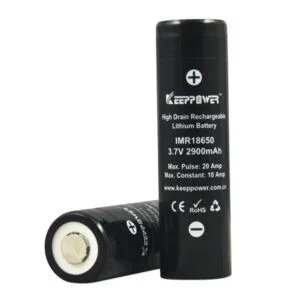
Without extras: Battery cell without options as in the main picture.
– Raised positive terminal: A button (nipple) welded to the positive terminal using a special welding process raises the flat positive terminal by approx. 2 mm, similar to a normal battery, for example (at extra cost).
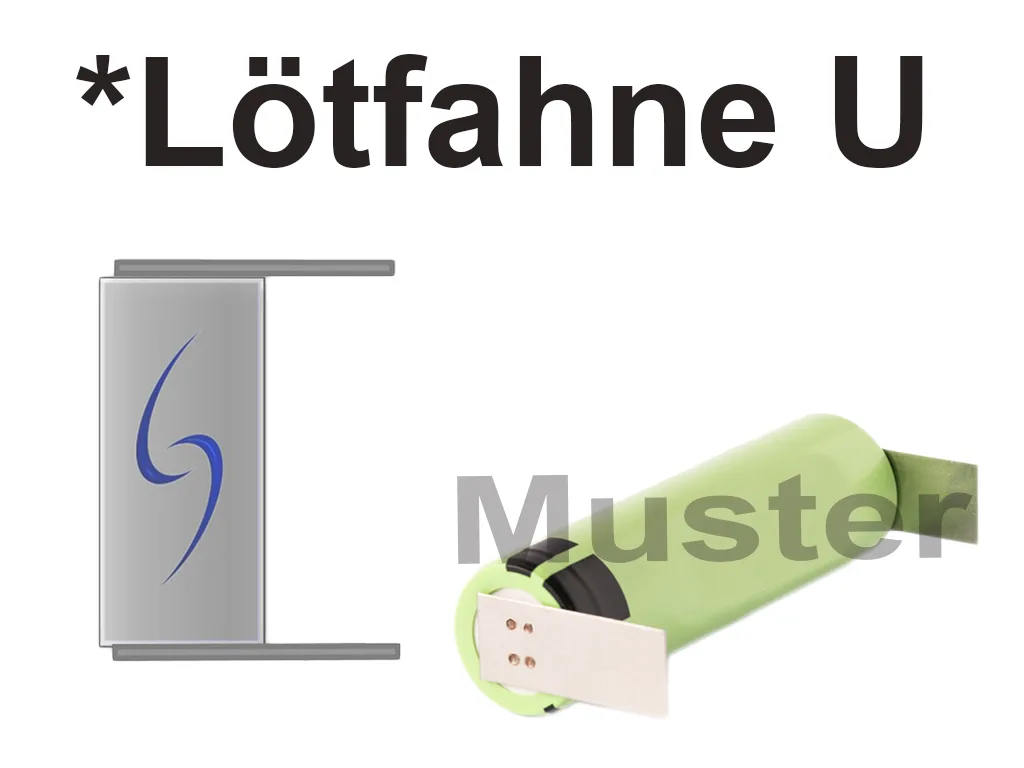
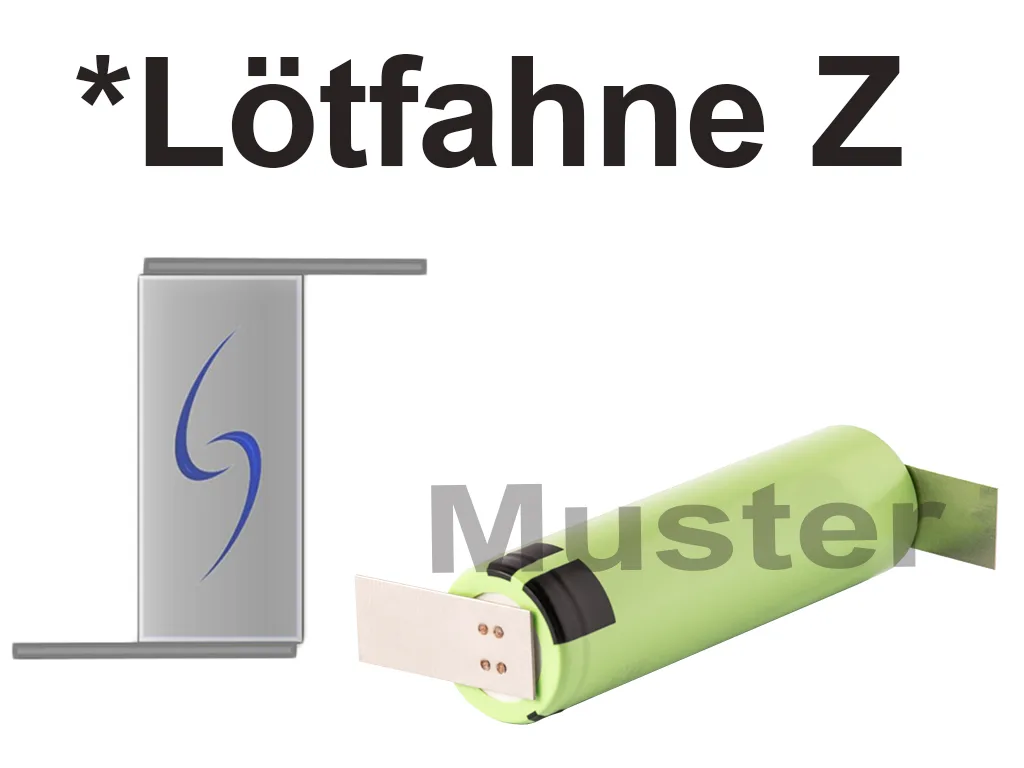
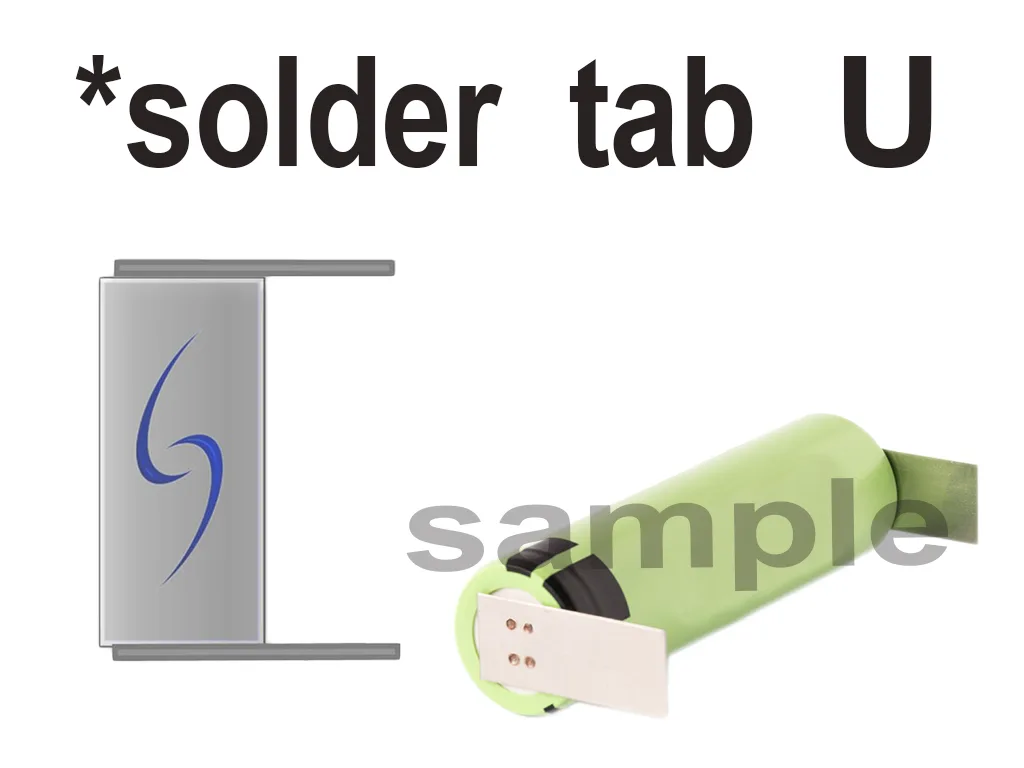
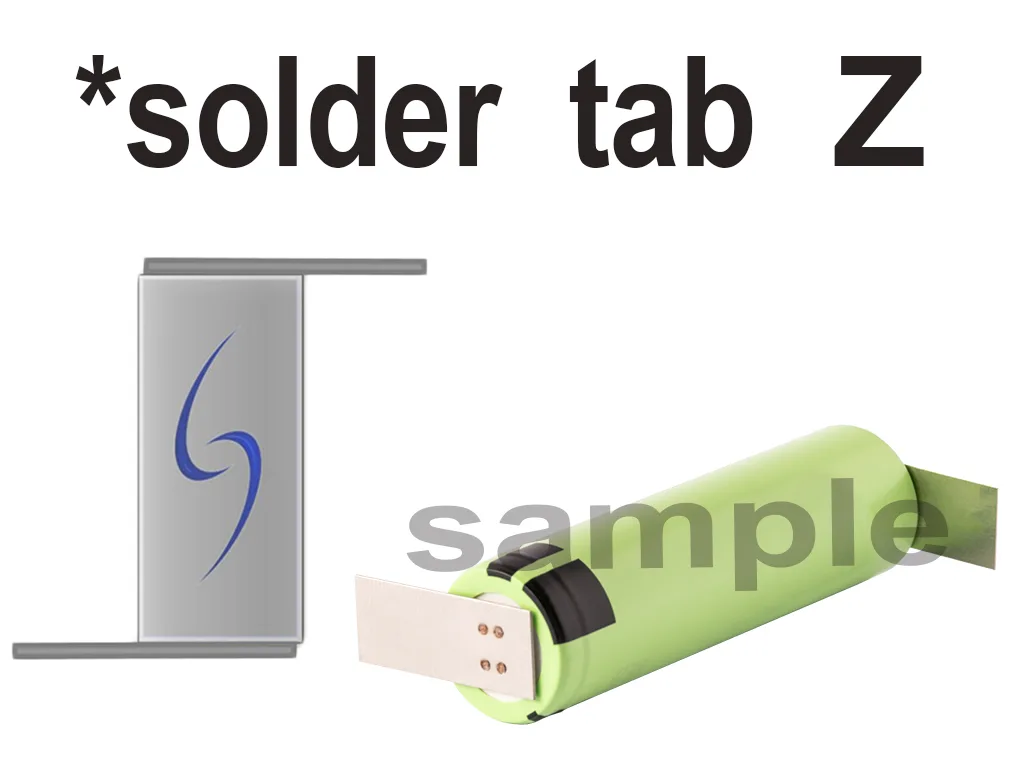
– Solder lug: A metal tongue (W: 7mm x L: 25mm x D: 0.15mm), which is firmly connected to the positive and negative terminals of the battery and is used to solder a connecting wire or other batteries to the component. (for an extra charge)
U – Both solder tags point in one direction (e.g. for parallel connection or soldering to electronic components)
Z – Solder tags point in opposite directions. (e.g. series connection or construction-related soldering)
Please note: The Panasonic/Sanyo industrial cell has no integrated PCB/BMS electronic protection circuit and insufficient insulation for normal household use (e-cigarette, torch, etc.) and lacks labelling. The industrial cells are designed for further processing into battery packs or integrated use.
General information on capacity: The specified capacity of a rechargeable battery indicates the amount of energy it can store under ideal laboratory conditions. This value is measured at a constant temperature and under defined conditions in order to create a reliable reference for the performance of the battery. These conditions cannot be met with commercially available test devices.
¹Typical capacity: Average, real measured value, often slightly higher than the nominal capacity.
²Nominal capacity: Official, standardised value as a reference value.
Minimum capacity: Guaranteed minimum value that is not fallen short of.
Technical Data
| Cell type | NCR18650GA Li-Ion Green |
| Typical capacity | *3450mAh |
| Minimum capacity | 3350mAh |
| Nominal capacity | **3300mAh |
| Nominal voltage | 3.6V – 3.7V |
| Final charging voltage | 4,2V |
| Discharge current (constant) | 2.5C 8A |
| Max. discharge current (constant) | 3C 10A |
| Charging current | up to 0.5C 1635mA |
| Final discharge voltage | 2,50V |
| PCB protection circuit | not available |
| positive pole | flat (flat top) |
| Diameter | 18.30 mm ± 0.2 mm |
| Height | 65.10 mm ± 0.25 mm |
| Weight | 48 g ± 1 g |
| Charging method | CC-CV |
Notes:
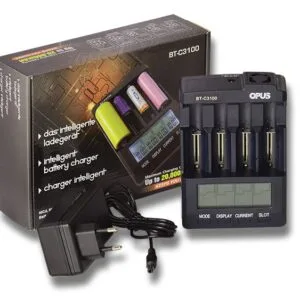
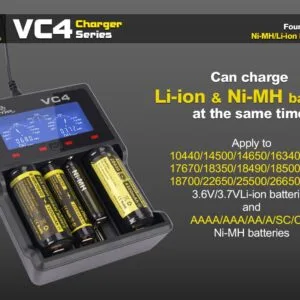
Charging lithium-ion batteries requires a special charger that charges the batteries according to a special charging procedure. (CCCV = constant current, constant voltage.) The batteries must not be charged above a voltage of 4.2 volts, otherwise there is a risk of fire and explosion. It is advantageous to charge the batteries only up to approx. 4.1 volts, as this significantly increases the service life or number of charging cycles (possibly up to double). Only lithium-ion chargers may be used for charging. However, cheap chargers sometimes have the disadvantage that they do not switch off safely at the end of the charging process, but continue to charge the batteries with a low charging current, which can be dangerous.
Furthermore, rechargeable batteries and batteries do not belong in household waste! Please dispose of them as prescribed by law in the municipal collection centres or in the [usually green] containers provided for this purpose by retailers.²²











Reviews
There are no reviews yet.